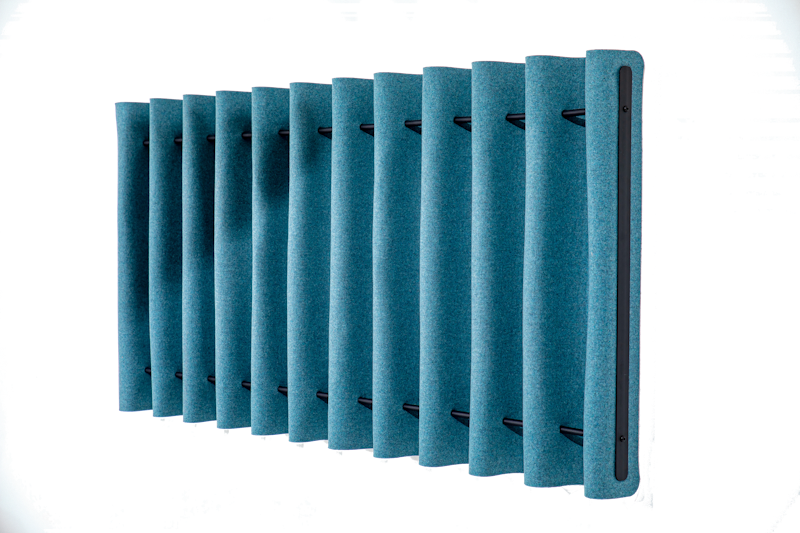
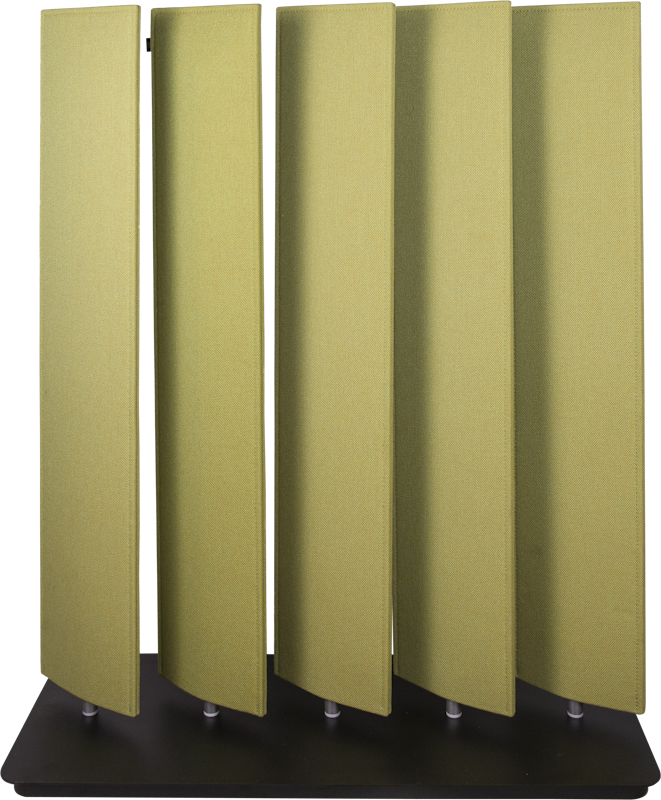
Adding sound absorption is important, but it does not solve every form of distraction on its own. A nearby conversation can still be clearly understood if there is an uninterrupted path between the speaker and listener, while movement in the surrounding environment continuously competes for attention.
The goal is not simply to make everything quiet, but to reduce unwanted distractions while preserving healthy communication where it is needed.
Distraction Isn't Only About Volume
Reduce the sound you hear, the speech you understand, and the movement you see.
True workplace focus requires addressing three distinct sensory triggers simultaneously:
- General Sound Levels: Ambient noise and echoing background build-up.
- Intelligible Speech: Clear, intelligible words carrying across open sightlines from neighboring desks.
- Visual Movement: Foot traffic, peripheral motion, and activity passing through team sightlines.
A Multi-Layered Approach to Focus
Solving distraction requires attacking the problem from several angles:
- Ceiling & Wall Absorption: Lowers overall ambient noise and controls sound energy build-up throughout the space.
- Screens & High-Backed Furniture: Blocks direct paths of speech between workers while shielding sightlines from distracting movement.
- Intelligent Space Planning & Zoning: Separates high-traffic corridors and active collaborative hubs from quiet focus zones.
- Enclosed Focus Areas: Provides quiet micro-settings for individual deep work and high-concentration tasks.