A conversation does not stop at the edge of a desk. In open environments, human speech travels directly across open sightlines, while hard, reflective surfaces allow sound to remain active in the space for longer.
The result? Spoken words stay completely intelligible at much greater distances than intended, making speech one of the leading causes of workplace distraction and reduced privacy.
The Science of Sound Travel in Open Spaces
-
Direct Line of Sight: If there are no physical obstacles between workstations, voice signals travel unhindered directly to nearby listeners
-
Reverberation & Reflection: Hard walls, glass, and concrete act like mirrors for sound, reflecting voice waves back into the room and keeping conversations audible across long distances
-
Speech Intelligibility: Distraction isn't just caused by general noise—it occurs when brain processes can clearly understand the words spoken by someone else across the room
Breaking the Path: Absorption + Blocking
To effectively control speech travel, acoustic design combines two key strategies:
- Sound Absorption: Wall panels and ceiling elements reduce the overall build-up of sound energy, soaking up reflections so speech decays faster.
- Path Interruption: Freestanding screens, acoustic furniture, spatial zoning, and enclosed micro-settings physically break up sound travel and sightlines.
By pairing absorption with physical barriers, you limit how far intelligible speech can carry, boosting both acoustic and visual privacy simultaneously.
"Absorption reduces overall sound build-up, while screens, acoustic furniture, and strategic zoning limit how far conversations remain intelligible."
Richard Ellerbeck
Experienced Acoustic Consultant

Designing for Speech Privacy
If you can see each other, you can hear each other.
- Ceiling Absorption: Baffles and ceiling panels capture upward speech energy before it can bounce into neighboring workstations.
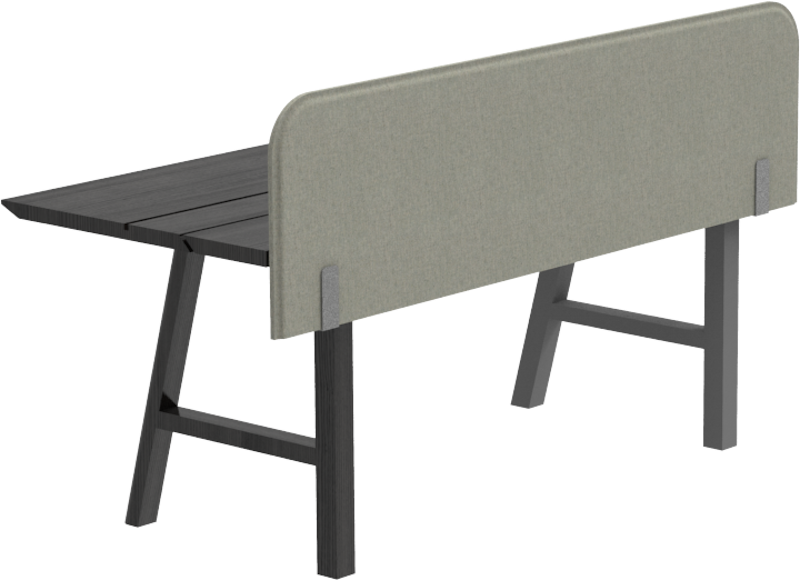
- Desk & Floor Screens: Desk-mounted panels and space dividers break direct lines of sight and sound transmission between sitting workers.
- Enclosed Settings: Phone booths and acoustic pods offer fully isolated zones for sensitive, high-privacy discussions.